Missions / In the bookEras 00 to 09

Ten eras. Ten ways of seeing.

From the first photographs of the Moon to a crew flying back around it. The book follows NASA's photographic record in ten eras, across 336 pages and more than 340 photographs.

Black and white photograph of Earth, half lit, rising above the curved horizon of the Moon
Lunar Orbiter 1, August 23, 1966. Page 32

Era 00 / 09pp. 18 to 33

Learning to Look

Cave walls to the Moonc. 15,000 BC to 1966

The first photographs of the Moon, cameras carried up by balloon and by captured rocket, Sputnik's beep over a startled country, and the first look back at Earth.

  • Harvard Observatorypp. 20 and 23
  • Kew Photoheliographp. 22
  • V-2 rocketspp. 25 to 27
  • Lunar Orbiter 1p. 32

Read more: The first photographs from space
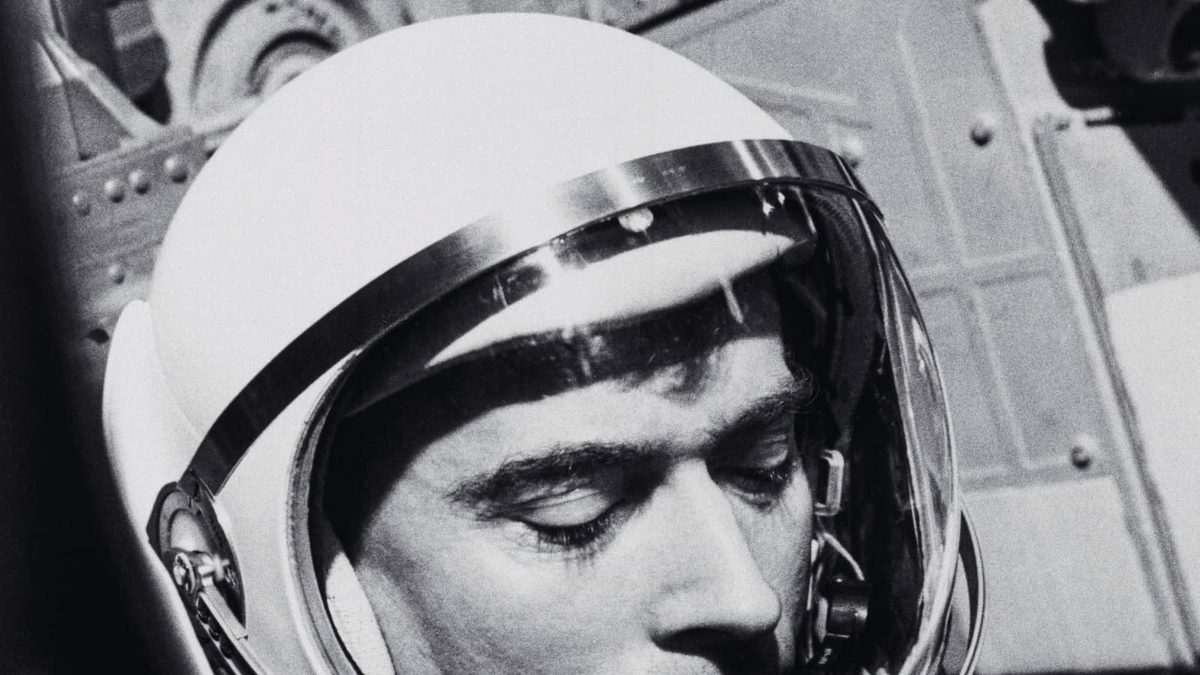
Black and white portrait of a Gemini astronaut in his helmet inside the capsule

Era 01 / 09pp. 34 to 63

Human Eyes in Space

Mercury and Gemini1961 to 1966

The first Americans in orbit, and the forty-dollar drugstore camera Glenn carried up. A spacewalk nobody wanted to end, a stuck thruster, and two spacecraft a foot apart.

  • Project Mercurypp. 40 to 48
  • Project Geminipp. 37, 50 to 62

Read more: Ed White, the first American spacewalk

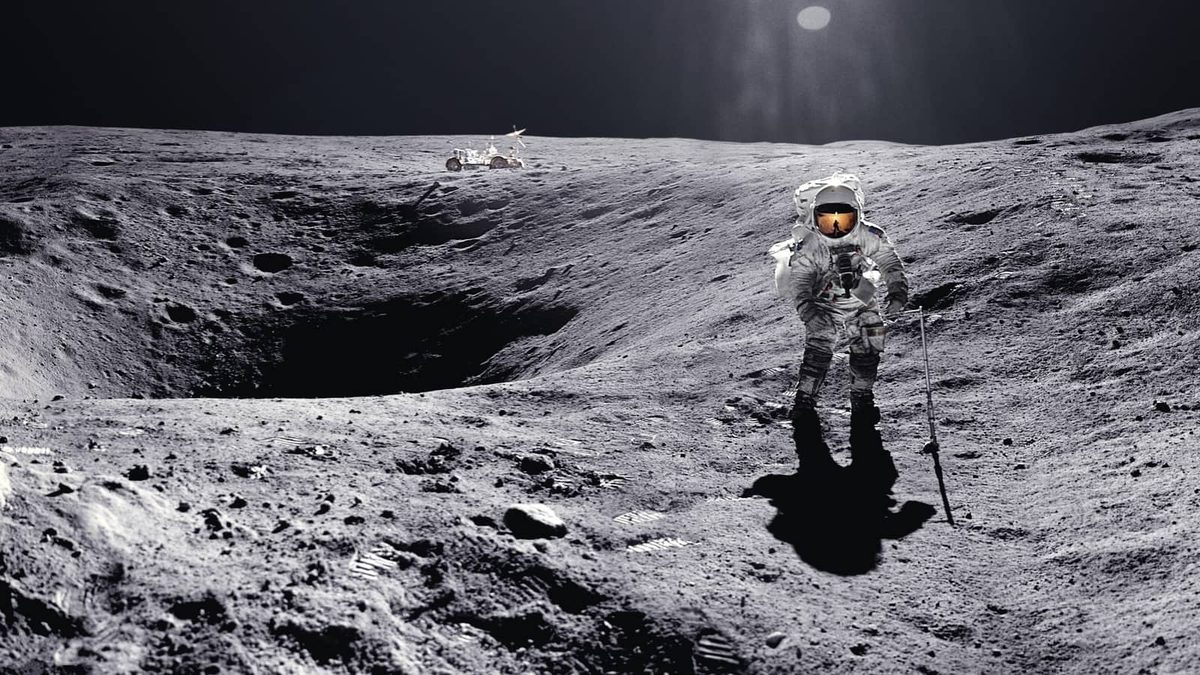
An Apollo astronaut standing beside a crater on the grey lunar surface

Era 02 / 09pp. 64 to 103

The Long Look Back

Apollo1967 to 1972

The first humans to see the whole Earth at once, the first bootprint, twelve Hasselblads left standing on the Moon, and the photograph of home that closed the program.

  • Apollo 7pp. 78 to 81
  • Apollo 8pp. 82 to 83
  • Apollo 9pp. 70 to 71
  • Apollo 11pp. 86 to 95
  • Apollo 13pp. 96 to 99
  • Apollo 17pp. 100 to 103

Read more: Earthrise, The Blue Marble, every Apollo mission on the Apollo VII–XVII site

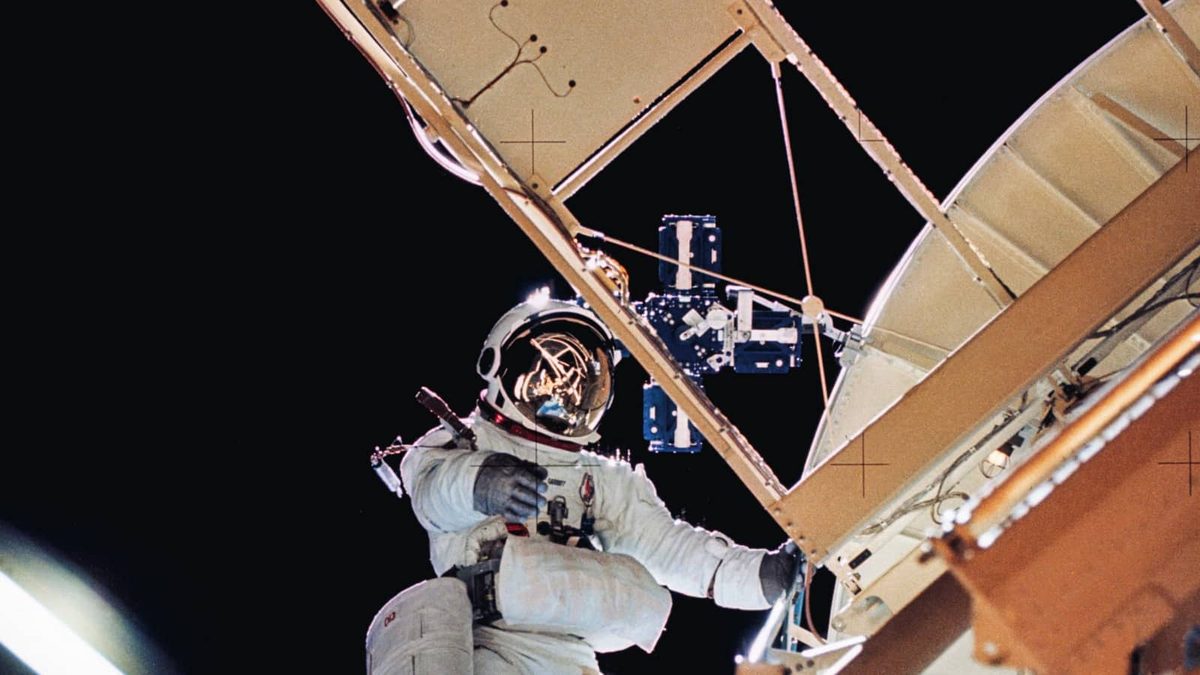
A Skylab astronaut in a white spacesuit working on the outside of the station
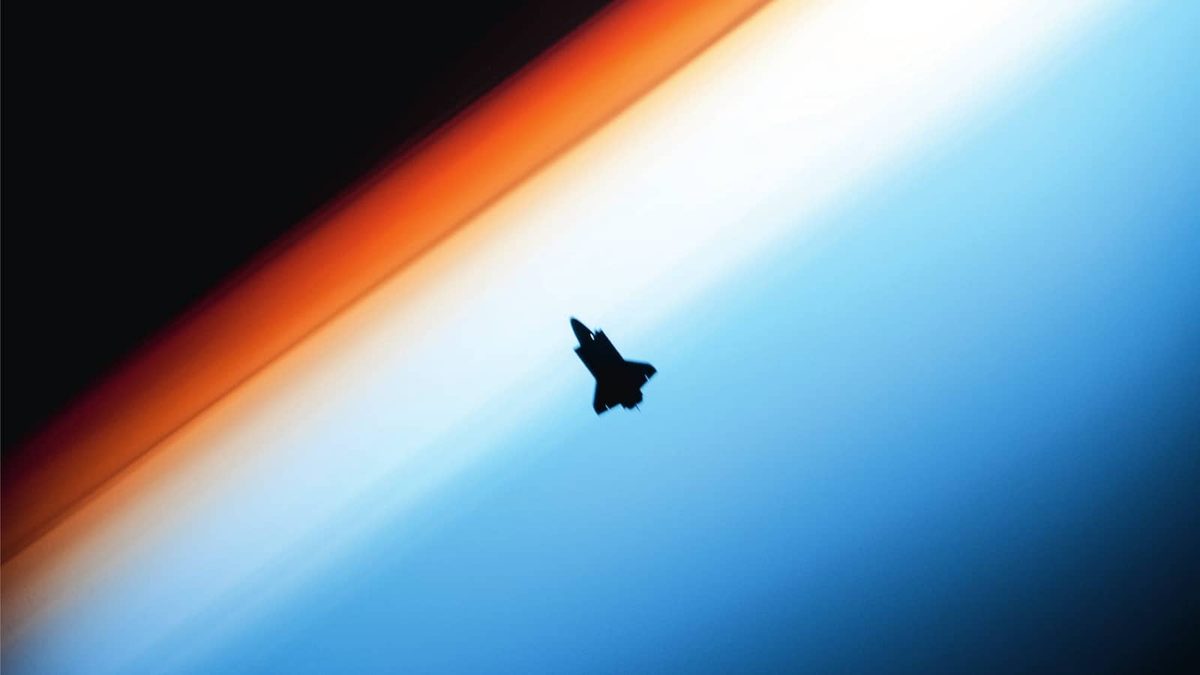
The Space Shuttle in silhouette against the thin blue and orange band of the atmosphere

Era 03 / 09pp. 104 to 135

Learning to Stay

Skylab, Shuttle, Mir, and Landsat1972 to 2001

Living up there instead of visiting. Skylab saved by a homemade sunshade, a handshake in orbit with the Soviets, the shuttle's promise of routine, and satellites turned back on Earth itself.

  • Skylabpp. 107, 112 to 117
  • Space Shuttlepp. 119 to 127
  • Apollo-Soyuzp. 128
  • STS-71, Shuttle and Mirp. 130
  • Landsat 1pp. 132 to 134

Read more: Bruce McCandless, flying free

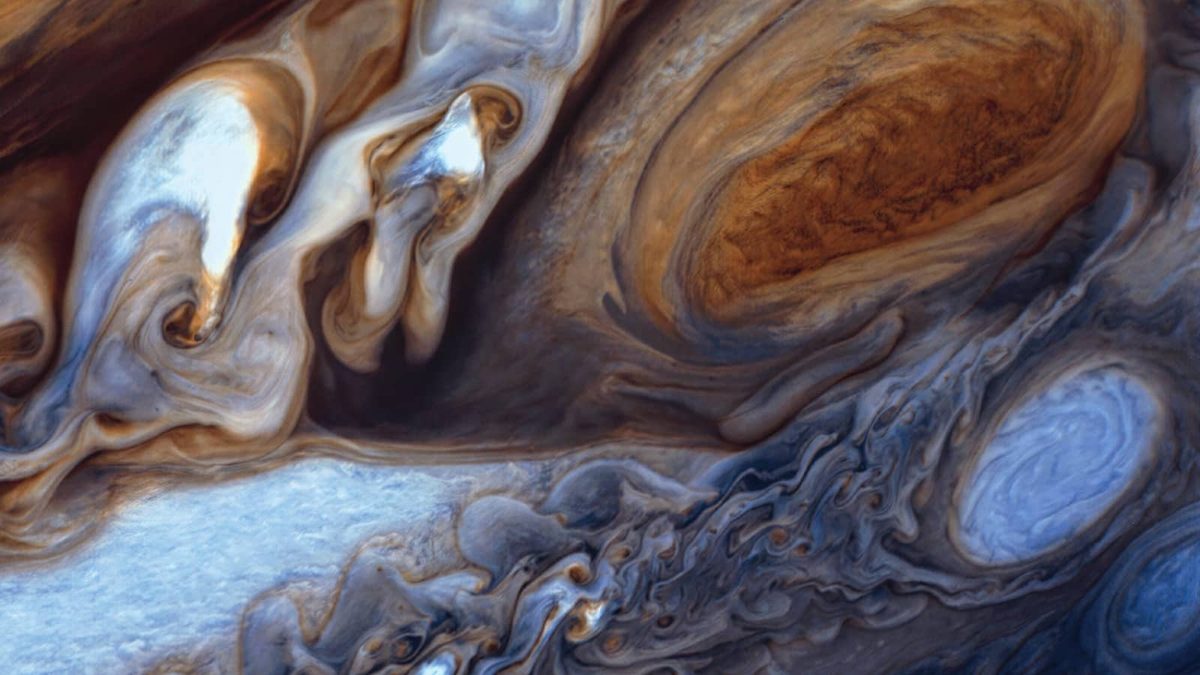
Close view of the swirling cloud bands and the Great Red Spot of Jupiter

Era 04 / 09pp. 136 to 165

Machines as Eyes

Ranger to Voyager1964 to 1990

Cameras sent where people could not go. Ranger's last seventeen minutes, Mariner ending the Martian canals, Pioneer at Jupiter, and Voyager out to the Pale Blue Dot.

  • Rangerpp. 144 to 146
  • Surveyor 1pp. 147 to 148
  • Lunar Orbiter 1p. 150
  • Mariner 4pp. 152 to 153
  • Mariner 9p. 155
  • Pioneer 10 and 11pp. 156 to 157
  • Voyager 1 and 2pp. 141, 158 to 164
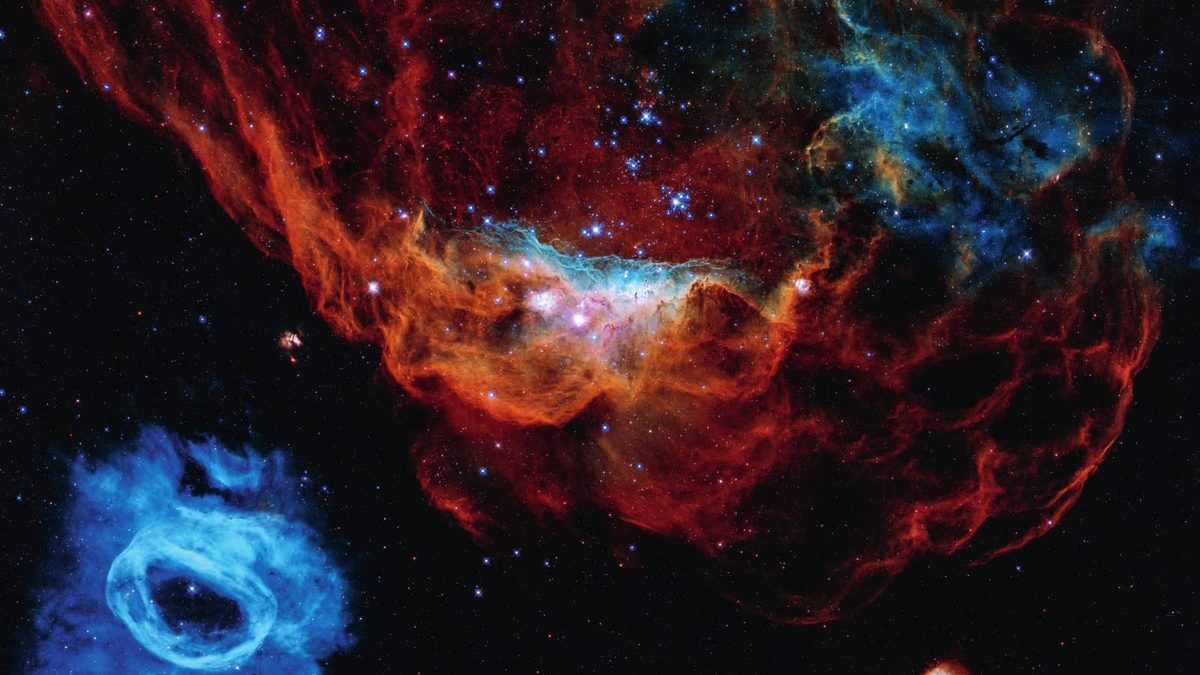
Hubble photograph of red and blue clouds of glowing gas in a nebula

Era 05 / 09pp. 166 to 197

Above the Air

Hubble Space Telescope1981 to 2020

A telescope that barely traveled, built to hold still and stare. A mirror ground perfectly to the wrong shape, a repair made by hand in orbit, and ten days aimed at a patch of empty sky.

  • Mt. Wilson Observatoryp. 172
  • STS-61pp. 175 to 177
  • Hubblepp. 178 to 197
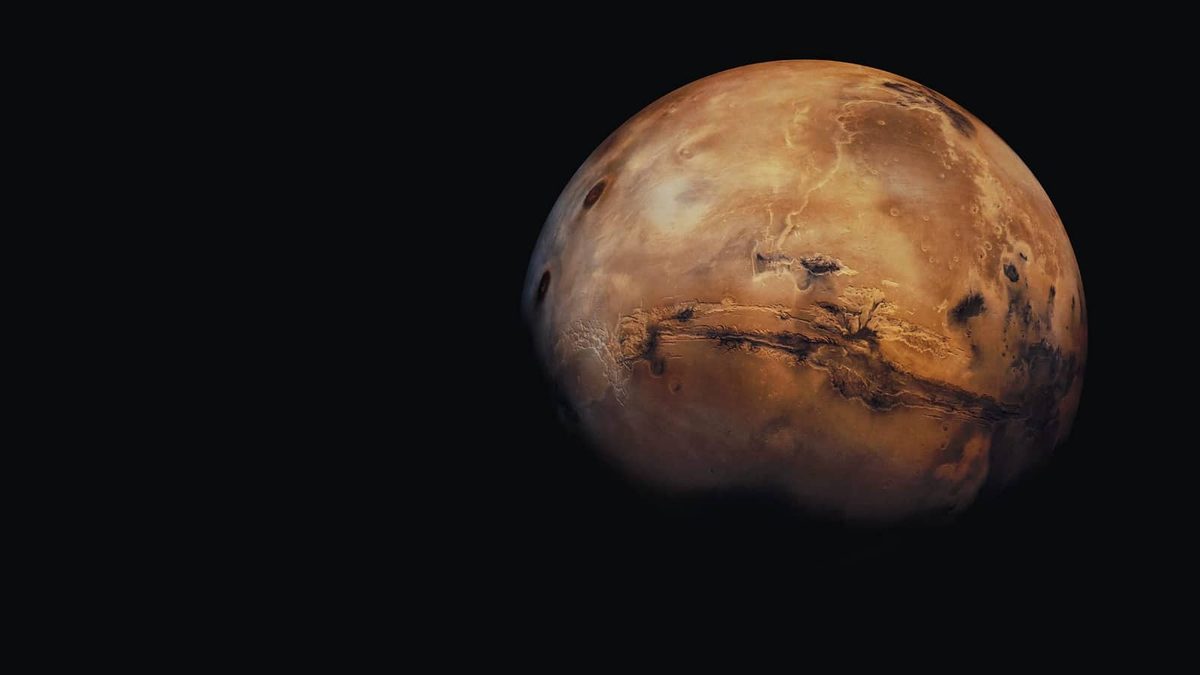
Mars seen whole from orbit, its surface orange and cut by a long canyon
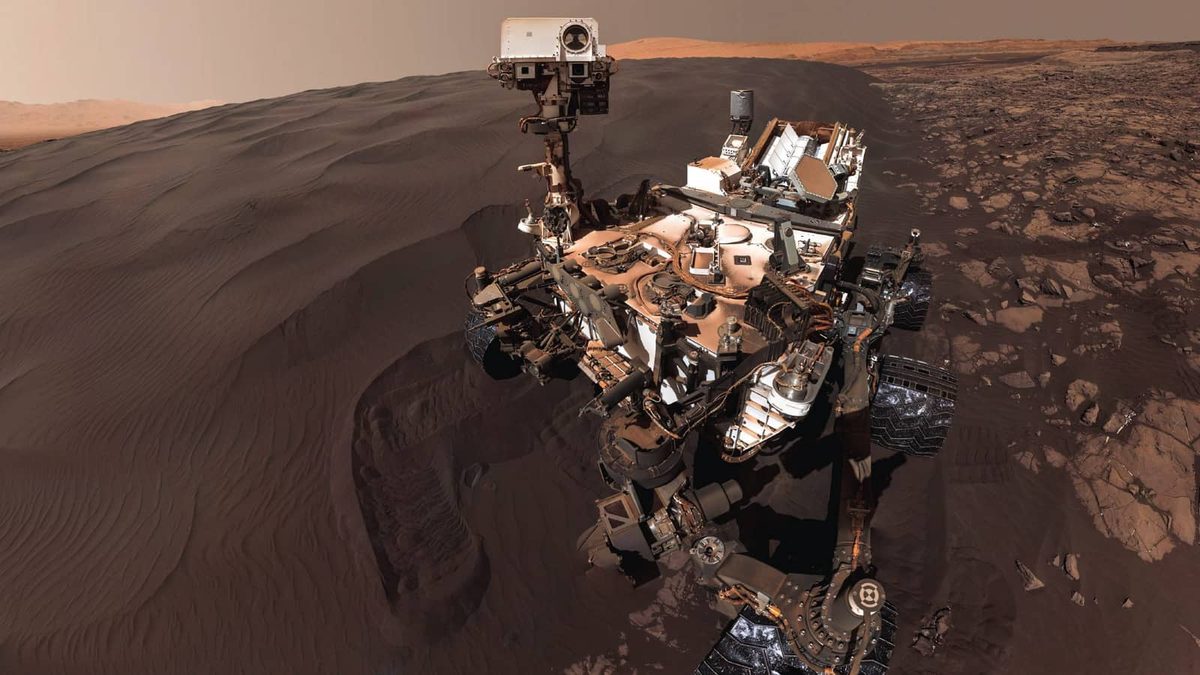
A Mars rover photographing itself on a rippled dune

Era 06 / 09pp. 198 to 235

Asking the Rocks

Mars1976 to 2026

Viking's first photograph, of its own footpad in red gravel. Rovers that outlived their warranties by years, a helicopter flying in air too thin for it, and sunsets that fade to blue.

  • Vikingpp. 208 to 211
  • Pathfinderp. 212
  • Spiritp. 217
  • Phoenixpp. 218 to 219
  • Mars Reconnaissance Orbiterpp. 222 to 224
  • Curiosityp. 226
  • Opportunityp. 227
  • Perseverancepp. 215, 229 to 235
  • Ingenuitypp. 230 to 231
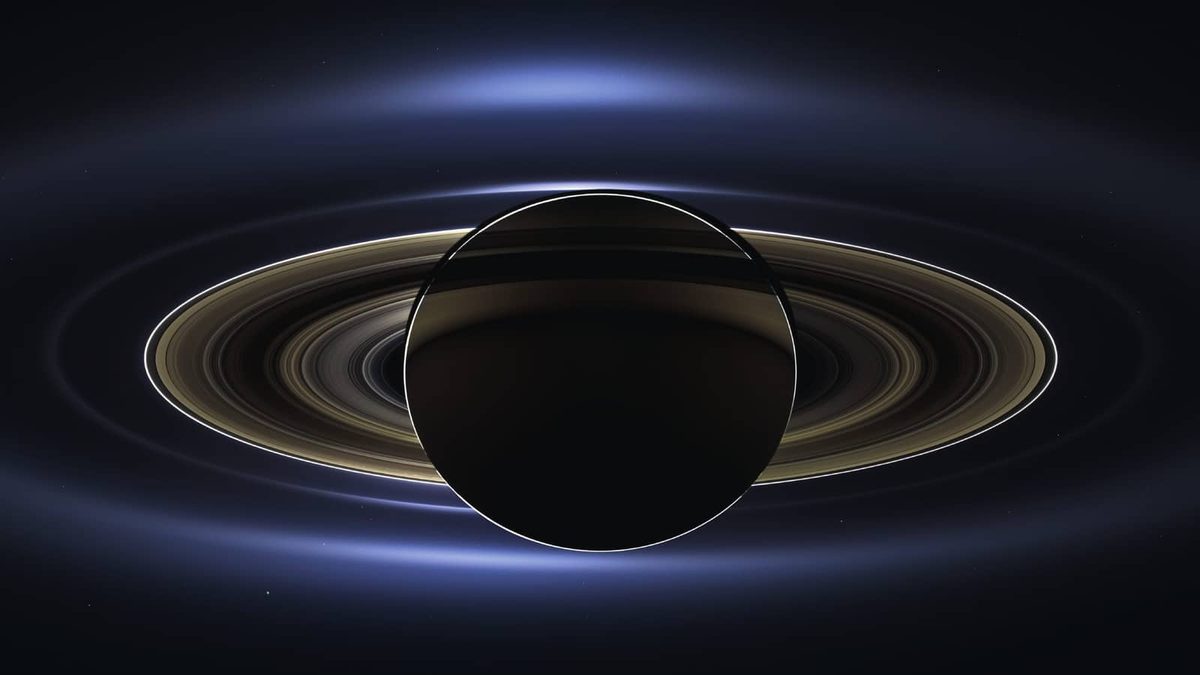
Saturn backlit by the Sun, its rings glowing around the dark planet

Era 07 / 09pp. 236 to 263

The Patient Machines

Galileo to OSIRIS-REx1989 to 2024

The long crossings. Galileo's six years to Jupiter, Cassini at Saturn and Huygens on Titan, Pluto met at last, and a piece of asteroid brought home.

  • Galileopp. 244 to 247
  • Cassinipp. 248 to 254
  • MESSENGERp. 257
  • New Horizonsp. 259
  • Junop. 260
  • OSIRIS-RExp. 263
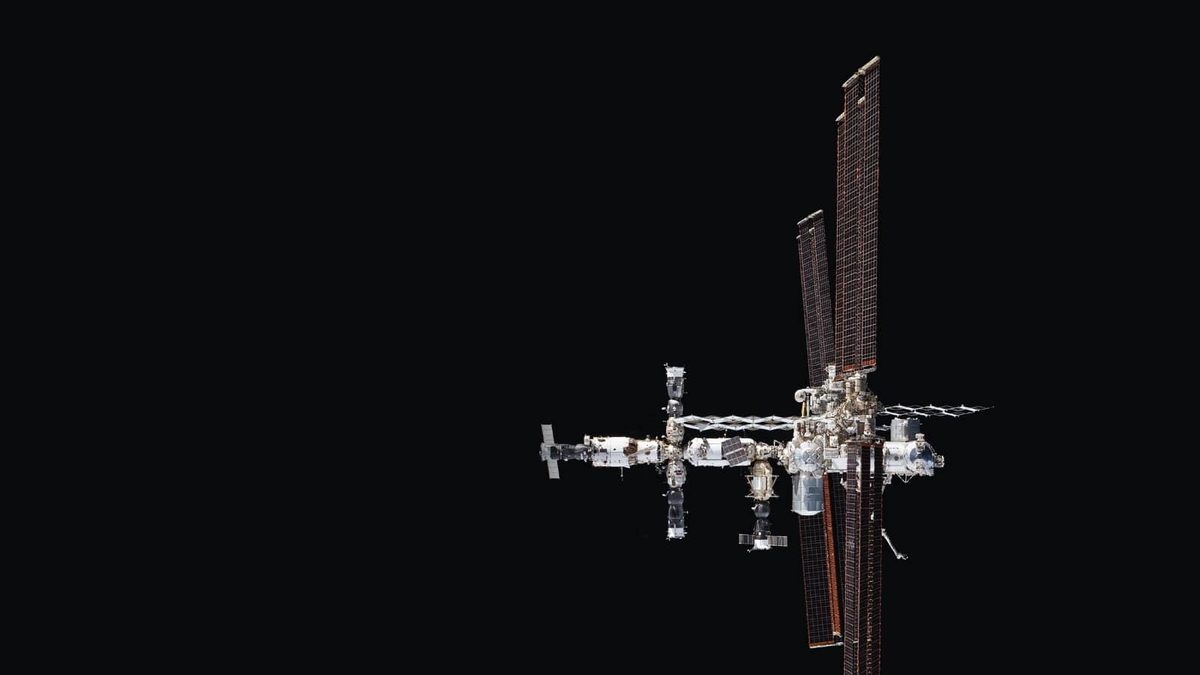
The International Space Station with its long solar arrays against black space

Era 08 / 09pp. 264 to 293

The View From Here

International Space Station1998 to 2025

A house built in orbit, never empty since November 2000. Seven windows in the Cupola, and eight million photographs of home made by people who lived with the view.

  • International Space Stationpp. 269 to 293
  • STS-107p. 277
A field of distant galaxies photographed by the James Webb Space Telescope
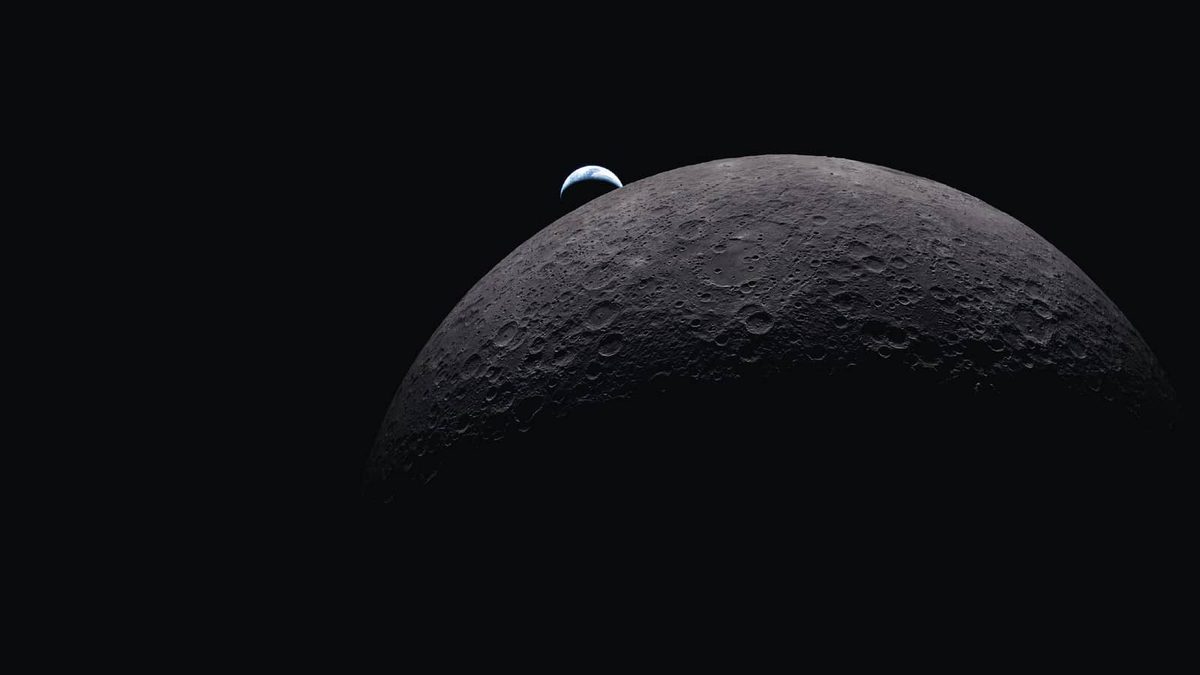
The dark curve of the Moon with a small crescent Earth above it

Era 09 / 09pp. 294 to 331

The Next Era of Seeing

Webb and Artemis2021 to 2026

Two machines a generation in the making. A telescope a million miles out, facing permanently away from home, and a crew flying back around the Moon to photograph it.

  • James Webb Space Telescopepp. 304 to 308
  • Artemis IIpp. 310 to 331

Read more: The Artemis II photographs

The book / teNeues336 pages

The whole journey in one volume

More than 340 photographs, restored from NASA's archives, from the first flights to Artemis II.